St. Croix County Dog Registration Information
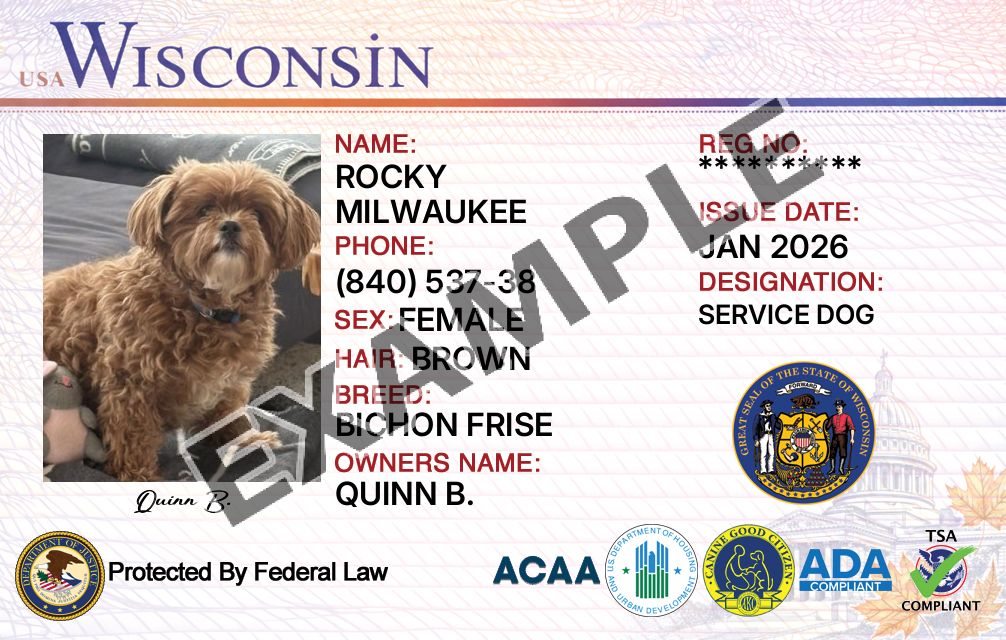
Service Dogs and Emotional Support Animals in St. Croix, Wisconsin
Registering a Dog in St. Croix County, Wisconsin (Service Dog or Emotional Support Dog)
If you’re searching where do I register my dog in St. Croix County, Wisconsin for my service dog or emotional support dog, the key thing to know is that Wisconsin dog registration is usually handled as a local dog license through your city, village, or town clerk/treasurer—not a single countywide “service dog” or “ESA” registry. In other words, most residents who need a dog license in St. Croix County, Wisconsin will license their dog with the municipality where they live, and provide proof of a current rabies vaccination as part of the process.
Important: A Dog License Is Not the Same as “Registering” a Service Dog or Emotional Support Animal
A dog license is a local registration tag required for most dogs (often tied to rabies vaccination compliance). A service dog is defined by training to perform disability-related tasks, and its legal protections come from disability laws—not from a special county registry. An emotional support animal (ESA) is different again: ESAs may have housing-related considerations, but generally do not have the same public-access rights as service dogs. Even if your dog is a service dog or ESA, you may still need a local license and must follow local public health rules such as rabies vaccination requirements.
Where to Register or License Your Dog in St. Croix County, Wisconsin
Because licensing is typically handled by your local municipality, below are examples of official offices within St. Croix County, Wisconsin that publish dog licensing information. If you live outside these municipalities, contact your own city/village/town clerk/treasurer for the correct local licensing office.
City of Hudson — City Hall (City Clerk)
505 3rd Street
Hudson, WI 54016-1694
Town of Hudson — Town Hall (Dog Licensing)
980 County Road A
Hudson, WI 54016
Monday 9:00 am–5:00 pm
Tuesday 9:00 am–6:00 pm
Wednesday 9:00 am–5:00 pm
Thursday 9:00 am–5:00 pm
St. Croix County Sheriff’s Office — Animal Resource Deputy (County-level enforcement resource)
Dog licensing is usually handled locally by your city/village/town, but county agencies may be involved in certain animal welfare enforcement matters. The Sheriff’s Office Animal Resource Deputy page provides official county contact details.
Sheriff’s Office (Physical Address)
Hudson, WI 54016
St. Croix County Government Center
Hudson, WI 54016
Note: This is not a dog licensing counter. For an actual animal control dog license St. Croix County, Wisconsin process, your city/village/town clerk is usually the licensing issuer.
How to Use the Office List
- If you live in the City of Hudson, start with Hudson City Hall (City Clerk).
- If you live in the Town of Hudson, use the Town of Hudson office contact.
- If you live in another municipality in St. Croix County (another city, village, or town), contact that municipality’s clerk/treasurer to find out where to register a dog in St. Croix County, Wisconsin for your specific address.
Overview of Dog Licensing in St. Croix County, Wisconsin
What “Registering” Usually Means
In St. Croix County, when people say “register my dog,” they usually mean getting a municipal dog license. A dog license generally results in a license record and a tag for your dog’s collar. This supports reunification if your dog is lost, and it helps local governments fund animal control and public health programs.
Rabies Vaccination Is Commonly Required Before a License Is Issued
Many Wisconsin municipalities require proof of a current rabies vaccination before they will issue a dog license, and municipal licensing pages in St. Croix County commonly state this requirement plainly. For example, the Town of Hudson’s dog licensing information states licensing requires proof of rabies vaccination from a licensed veterinarian, and the City of Hudson’s licensing page explains annual licensing expectations and enforcement timelines.
Do Service Dogs Need a Dog License?
Often, yes. A service dog may still need a local license and must follow local health rules (such as rabies vaccination). Some municipalities may waive the license fee for certain working dogs, but that does not automatically eliminate the requirement to license. Always confirm with the clerk/treasurer that issues your local license.
How Dog Licensing Works Locally in St. Croix County, Wisconsin
Step 1: Identify Your Municipality
St. Croix County includes multiple cities, villages, and towns. Dog licensing is typically handled by the municipality where you live (for example, the City of Hudson licenses dogs for residents in the city limits, while the Town of Hudson licenses dogs for residents in the town). If you’re unsure which municipality you’re in, check your property tax bill or contact your local clerk.
Step 2: Gather Documentation
The most common requirement to obtain a dog license in St. Croix County, Wisconsin is proof of current rabies vaccination. Depending on your municipality, you may also be asked for owner identification and proof of residency to confirm the correct jurisdiction and fee category.
Step 3: Apply Through Your Local Clerk/Treasurer
Many local governments issue dog licenses through the clerk’s office (or clerk/treasurer). Some municipalities provide downloadable forms, and some allow in-person licensing at city hall or the town office during published hours. The City of Hudson and Town of Hudson both publish dog licensing information through their official websites and list contact phone numbers and addresses for assistance.
Step 4: Renew Annually and Watch for Deadlines
Many Wisconsin municipalities run dog licenses on a calendar-year cycle. Some offices publish renewal start dates and late-fee deadlines. For example, the City of Hudson indicates licenses must be renewed each year beginning January 1, and the Town of Hudson describes a license year running January 1 through December 31 and references deadlines and enforcement for unlicensed dogs.
What About Animal Control or Rabies Enforcement?
Licensing is usually local, but enforcement and response can involve multiple levels: your municipal animal control contacts, contracted animal control officers, and/or county law enforcement resources depending on the issue. The St. Croix County Sheriff’s Office Animal Resource Deputy page describes responsibilities related to investigation and enforcement of state statutes related to mistreatment of animals, and provides official county contact information.
Service Dog Laws in St. Croix County, Wisconsin
Service Dogs vs. Dog Licenses
A local dog license is a municipal registration requirement. A service dog is defined by its training to perform specific tasks for a person with a disability. Getting a dog licensed (and vaccinated) is about public health and local administration; it does not create service-dog status.
No Local “Service Dog Registration” Is Typically Required for Public Access
In most public-access situations, service dog rights come from disability laws. That generally means you do not need a special county-issued “service dog registration card” to enter public places where service animals are permitted. However, service animals still must follow legitimate health and safety rules that apply to all dogs in a jurisdiction, which is one reason local licensing and rabies compliance still matter.
Practical Tip for Residents
If you’re asking where to register a dog in St. Croix County, Wisconsin because your dog is a service dog, start with the same place you would for any dog: your municipal clerk/treasurer. Then ask whether any fee exemptions apply locally and what documentation the office requires to process the license.
Emotional Support Animal Rules in St. Croix County, Wisconsin
ESAs Are Not the Same as Service Dogs
Emotional support animals provide comfort or support, but they are not necessarily trained to perform specific tasks related to a disability. Because of that, ESAs are typically treated differently from service dogs for public access. That difference is often the source of confusion when people search where do I register my dog in St. Croix County, Wisconsin for my service dog or emotional support dog.
Licensing Still Applies
Even if your dog is an ESA, you generally still need to follow local licensing requirements. In practice, that means you still obtain a dog license in St. Croix County, Wisconsin through your municipality, and you still need current rabies vaccination proof when required.
Housing Questions
Many ESA-related questions come up in housing contexts (landlords, pet policies, deposits, and documentation). Those topics are separate from municipal licensing. For licensing purposes, you typically go to the same municipal office you’d use for any dog license, then keep your rabies documentation current.
Frequently Asked Questions
Most residents obtain a local dog license through their city, village, or town (often the clerk/treasurer). County offices may be involved in certain enforcement or animal welfare matters, but the licensing counter is usually municipal. If you’re trying to find where to register a dog in St. Croix County, Wisconsin, start by identifying your municipality and contacting that clerk’s office.
Requirements vary by municipality, but commonly include:
- Proof of current rabies vaccination from a licensed veterinarian
- Owner identification
- Proof of residency (to ensure you’re licensing in the correct municipality)
- The licensing fee set by your local government
Service dog status generally comes from the dog being individually trained to perform tasks for a person with a disability—not from purchasing a certificate or enrolling in a registry. However, your service dog may still need a dog license in St. Croix County, Wisconsin through your local municipality and must comply with local health requirements like rabies vaccination.
No. A service animal is trained to perform disability-related tasks. An emotional support animal provides comfort and support but is typically not task-trained for disability-related work in the same way. Regardless of label, local licensing requirements can still apply, so you still need to know where to register a dog in St. Croix County, Wisconsin through your municipality.
For certain county-level animal welfare enforcement matters, the St. Croix County Sheriff’s Office Animal Resource Deputy page provides official contact numbers. For licensing questions and routine registration, contact your municipality’s clerk/treasurer office.
Disclaimer: Licensing requirements and office locations may change. Residents should verify details with their local animal services office within St. Croix County, Wisconsin.
Register A Dog In Other Wisconsin Counties
Select your county below to get started with your dog’s ID card. Requirements and license designs may vary by county, so choose your location to see the correct options and complete your pup’s registration.
- Adams County Dog Registration
- Ashland County Dog Registration
- Barron County Dog Registration
- Bayfield County Dog Registration
- Brown County Dog Registration
- Buffalo County Dog Registration
- Burnett County Dog Registration
- Calumet County Dog Registration
- Chippewa County Dog Registration
- Clark County Dog Registration
- Columbia County Dog Registration
- Crawford County Dog Registration
- Dane County Dog Registration
- Dodge County Dog Registration
- Door County Dog Registration
- Douglas County Dog Registration
- Dunn County Dog Registration
- Eau Claire County Dog Registration
- Florence County Dog Registration
- Fond du Lac County Dog Registration
- Forest County Dog Registration
- Grant County Dog Registration
- Green County Dog Registration
- Green Lake County Dog Registration
- Iowa County Dog Registration
- Iron County Dog Registration
- Jackson County Dog Registration
- Jefferson County Dog Registration
- Juneau County Dog Registration
- Kenosha County Dog Registration
- Kewaunee County Dog Registration
- La Crosse County Dog Registration
- Lafayette County Dog Registration
- Langlade County Dog Registration
- Lincoln County Dog Registration
- Manitowoc County Dog Registration
- Marathon County Dog Registration
- Marinette County Dog Registration
- Marquette County Dog Registration
- Menominee County Dog Registration
- Monroe County Dog Registration
- Oconto County Dog Registration
- Oneida County Dog Registration
- Outagamie County Dog Registration
- Ozaukee County Dog Registration
- Pepin County Dog Registration
- Pierce County Dog Registration
- Polk County Dog Registration
- Portage County Dog Registration
- Price County Dog Registration
- Racine County Dog Registration
- Richland County Dog Registration
- Rock County Dog Registration
- Rusk County Dog Registration
- Sauk County Dog Registration
- Sawyer County Dog Registration
- Shawano County Dog Registration
- Sheboygan County Dog Registration
- Taylor County Dog Registration
- Trempealeau County Dog Registration
- Vernon County Dog Registration
- Vilas County Dog Registration
- Walworth County Dog Registration
- Washburn County Dog Registration
- Washington County Dog Registration
- Waukesha County Dog Registration
- Waupaca County Dog Registration
- Waushara County Dog Registration
- Winnebago County Dog Registration
- Wood County Dog Registration